Why I wouldn't use an online will service

Firstly, I’ll be transparent: Yes, I have a financial interest in this. I am a lawyer who writes wills, and I think you should pay a lawyer to write your will. But let me explain why.
It is currently “Wills Month” here in Aotearoa, which I believe started as an advertising campaign by Public Trust, to encourage you to write your will (through them). Fair enough, good marketing.
It’s now been taken up by charities around the country, some of which are offering free wills through online will-writing services, I assume with the hope you’ll leave them something in return. OK, I am firmly pro everyone having a will, and pro giving to charity in your will.
But those online will-writing services are coming for my job.
I’m very aware that they, and AI, are likely the future, and I can imagine a time when I’m no longer needed. But… are we there yet?
I tried an online will service, which I’ll call “OnlineWill” and have written a (biased) review, to (maybe) convince you I should still have a job, for a little while longer…
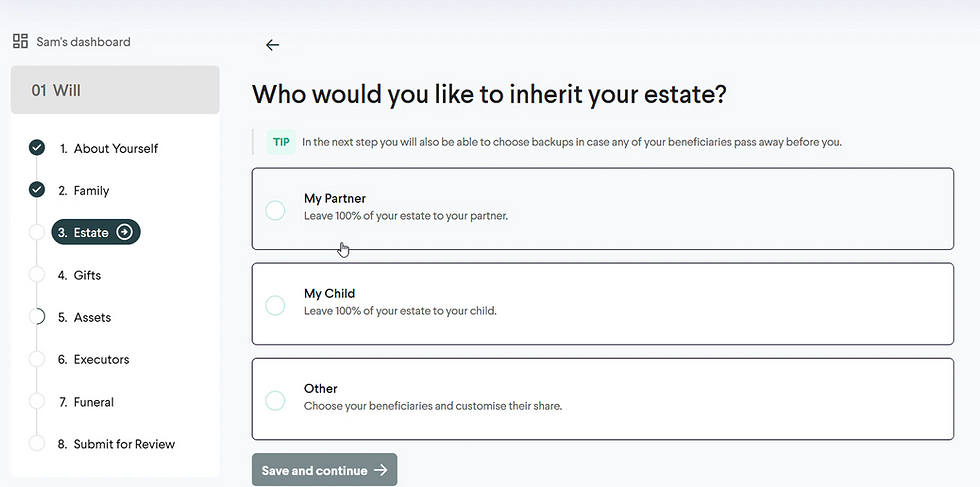
The process
The OnlineWill forms were clear and easy to fill in. Well done. I was definitely taking notes for how to improve my process.
It included some decent explanations, such as what executors do etc. I dutifully filled it in with some slightly made-up details of my life and submitted it.
The service says that their wills are reviewed by a lawyer before being sent to the customer. So, it wasn’t instant. A few days later, I received my will as a pdf, along with instructions on how to download and sign it. Efficient.
Strange beginnings
The first thing I noticed was that the wording and formatting didn’t look quite right for a New Zealand will. It started:
“This will is made by me, Samuel Leonard French of 57 Willis Street, Te Aro, Wellington 6011.”
I’ve read hundreds of wills. Maybe thousands. I spent a summer scanning all the wills in a Masterton law firm’s deeds vault. They don’t start like that.
A New Zealand lawyer might ordinarily start off with:
“This is the last will of me, Samuel Leonard French of Wellington, Solicitor.”
Always, Full name, town, occupation. I went back and looked at the form, and in fact, they never even asked me for my occupation.
Does it matter? Probably not. It doesn’t make the will invalid. But it’s just not the conventional format we use, which mirrors the wording we use in probate applications to the High Court when someone dies.
The OnlineWill company is Australian-based. I did a wee google of what an Australian will looks like, and it seems they’ve used the Australian format. But I used the New Zealand version of their site? Why not ask for an occupation and use the conventional New Zealand wording? It just seemed sloppy.
The same issue continued with my executors.
The form asked for my executor’s full name and relationship to me. It then asked me to provide an email address, phone number, date of birth or address as a “method of verification”. I only provided a phone number.
The will therefore provided:
“I appoint as Executor of my Will Baxter French (Ph: +64 27 444 9293)”
What? Why would you put a phone number in a will?
You’re supposed to identify the executors in the same way I mentioned above:
“I appoint my son, Baxter Rex French of Wellington, Security Guard, as executor…”
Also, it never asked the any follow-up questions. Does your son have a middle name, for example? It’s not the end of the world if it is missed out, but it just adds an extra line to the probate application, and those High Court registrars are fussy if we miss it. It wastes time and money that can be avoided.
Where the hell is my husband?
Next, I had told OnlineWill that I had a partner, and his name. It didn’t ask any more about that, thank you. In particular, it didn’t clarify if we are married, or plan to get married.
That’s important, because we’re engaged, and when we (finally…) get married, under New Zealand law my will would be revoked unless I specifically stated in the will that it was made “in contemplation” of our marriage.
When I have a client with a partner, I ask them the admittedly awkward question: Are you planning to marry this person?
If the answer is yes, I add one sentence, which then saves them the time and money of re-doing their will after the wedding, which they probably won’t remember to do.
Do you even own that?
The OnlineWill form asked about my assets in one part of the process and, later, asked what gifts I wanted to make. That’s fine, I do the same.
I told it that I owned a house. I also told it that I had a family trust. I then gifted that house to someone in the will.
That’s sounds fine, but the problem is, my family trust owns my house. I can’t give it away in my will because I don’t own it.
Yes, technically I told them the wrong thing. My fault. But in everyday life, when someone asks me if I own my own house, I say yes. Only MPs claiming housing entitlements say “No, I don’t own any houses. A family trust owns the house I live in.”
That’s why if a client tells me they own a house and also tells me they have a family trust, I’m going to ask more questions. I even search the land register and check who actually owns the property.
The same problem can come up with jointly owned property. Many couples own their home as joint tenants. If they do, when one of them dies, their interest passes to the surviving owner by survivorship. It never becomes part of the estate that can be gifted to someone else under a will. That difference can have a very significant effect.
Won’t someone think of the children?
For my experiment, OnlineWill allowed me to leave a relatively small amount to my (real) fiancé and (imaginary) child, while leaving most of my estate to charity.
Of course, I can write a will like that if I want. But it can cause problems.
There was no warning or advice about the rights of a surviving partner under the Property (Relationships) Act 1976, or the possibility that my partner or child might make claims under the Family Protection Act 1955 because I didn’t leave them much.
You can leave your estate in whatever shares you like, but you should understand the possibility of real-life effects, conflicts and claims that your decisions can cause.
Where's the trust?
Remember I also told OnlineWill that I had a family trust. A lot of kiwis have trusts, but few understand them.
It didn’t ask what the trust owned, who the other trustees or beneficiaries were, or what powers I hold under the trust deed. Fair enough. It’s a will service.
Instead, it inserted this clause:
“I nominate and appoint my Executors to exercise all powers of appointment held by me.”
I hadn’t asked for that. The form never asked me.
This is where automated will-making starts to concern me more. It’s no longer simply recording an instruction I gave it. It is making a substantive provision about another legal arrangement without first having a proper discussion with me about the effects or my wishes.
The fine print
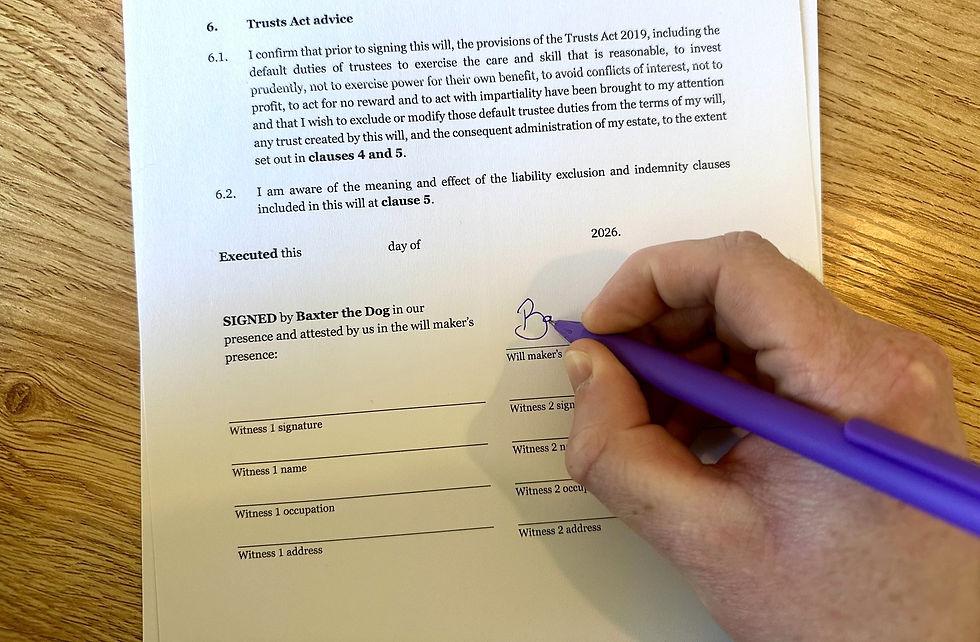
The will also included a large amount of fine print dealing with trustee powers and other general provisions. All good, so do the wills I write.
The problem isn’t necessarily that the clauses were there, it’s that they weren’t explained.
For example, it included a clause saying if I leave a house to someone, and it has a mortgage, the mortgage debt was to come out of the property being gifted. That might be exactly what I want. Or it might not be. That is something worth discussing.
There were also extensive trustee powers. Again, perfectly normal in wills. But a will creates trusts, and trustees are subject to duties under our Trusts Act 2019. Some of the clauses modified the statutory default trustee duties, which again, is OK, but is something I would expect to be explained before signing.
What if things get tricky?
There were also some things never came up in the online process, which I 100% know an Australian template will won’t be able to handle.
Retirement village occupation rights, Māori land, art royalties, whāngai children. These aren’t necessarily issues that come up often, but they’re situations where someone needs to stop and do some thinking before proceeding.
My (biased) review
To be fair to OnlineWill, the instructions it gave me on how to sign the will were clear and correct. The resulting will would be valid.
But it doesn’t seem much better than what you could get from one of those DIY will kits that were sold at PaperPlus for decades.
If your life is very simple, it could absolutely be an effective solution.
My worry is that most of my clients think their situation is simple.
Only once we dive into the detail do we find the trickier issues. That’s what makes my job interesting, and why law is a skilled profession.
This is a service holding itself out as specifically providing New Zealand wills, with legal review. I expected the process to reflect New Zealand practice and, more importantly, to identify obvious issues that arise from the information the customer has provided.
A perfect will form that explains every step and deals with every eventuality will become so long and unwieldy for clients to complete that it’s no longer convenient for them. I know, I’ve tried to write one.
What I eventually realised was there’s some stuff I can collect in a form online to save time, and there are some things that are just better discussed in person.
Yes, dealing with a real person costs money. But clients actually do seem to appreciate the advice and pointed questions they get. Going forward, that’s the value that we as lawyers need to show clients. We are doing more than just plugging your details into a template.
So that’s the model I’m working with going forward: hybrid, or cyborg wills…? Part online, part human. I hope it works for a little while longer.
You can of course contact me for assistance with writing your will.
Comments